
How to Get the Most from Your Contract Management Software
Managing construction contracts effectively is a cornerstone of successful project delivery. Whether working with NEC, JCT, or FIDIC contracts, having the right contract management software can streamline administration, improve compliance, and reduce the risk of disputes.
The truth is that if you’re already using a contract management system, you’re ahead of the game. But there’s still a lot of value left to extract from your CMS that you may not know about.
In this article, we’ll explore how construction project teams can get their existing contract management tool to work harder for them, delivering better project outcomes. By adopting a strategic approach, you can improve oversight, foster transparency, and keep your projects running smoothly from inception to completion.
Make The Most of Automation
Modern contract management platforms should offer a wide range of simple automation tools designed to reduce manual admin, standardise processes, and improve overall productivity. Typical starting use cases for these might be;
- Automatically generating contract notices from incoming emails
- Replicating communications across multiple contracts with a single action
- Storing critical documents directly in common data environments or integrated document management systems.
Used correctly, automation helps teams spend less time on repetitive tasks and more time on strategic activities. It also supports compliance by ensuring that processes are consistently applied across projects. For those using platforms like FastDraft, these capabilities are already built-in and can be configured with third-party integrations.
As automation and AI continue to evolve, the construction industry has a significant opportunity to improve productivity. At Built Intelligence, we’veexplored this in detail – from our automation maturity whitepaper to blog insights and events like our recent conference on AI and contract management. These resources can help your organisation assess where you are now and how to scale up your use of automation for better project outcomes.
Set Manual Alerts for Reminders That Can’t Be Automated
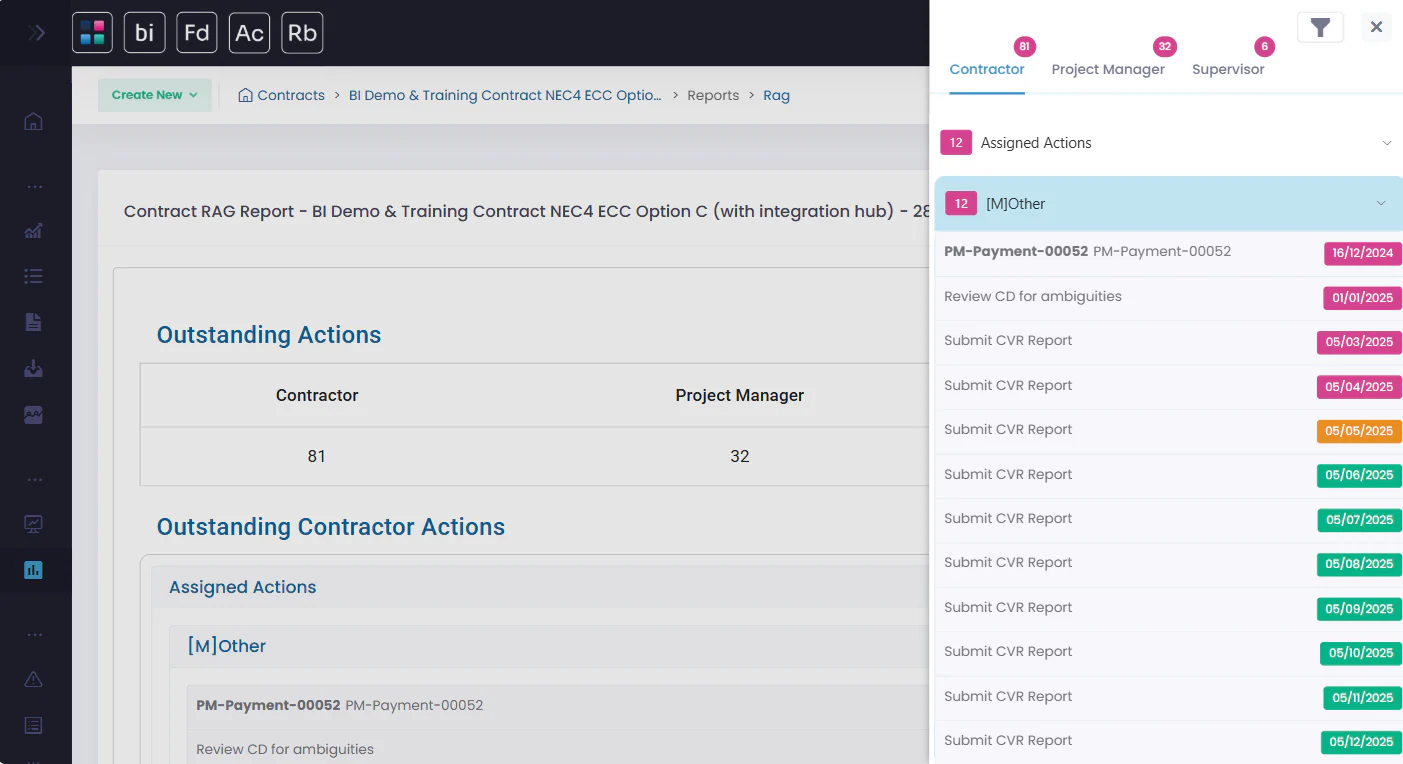
Construction projects are dynamic, with numerous deadlines and obligations to track. Of course, managing all of this with paper and spreadsheets is far more difficult than using a contract management system that flags due or overdue actions. But did you know it’s also possible to set manual, customised reminders?
While automation handles a lot, research shows that up to 18 percent of project issues are not proactively picked up by standard contract management tools or common data environments. This makes manual alerting an essential layer of protection.
In FastDraft, for example, users with the In-App Coaching feature enabled can set reminders for key contractual milestones like payment dates, notice periods, extension deadlines, and submission deadlines for variations or claims. These notifications can be customised and directed to the relevant team members, helping everyone stay on track.
Creating manual alerts not only prevents oversights but also supports compliance with complex contract clauses. When your team receives timely nudges, they can act proactively rather than reactively, saving time, reducing risk and maintaining momentum across the project.
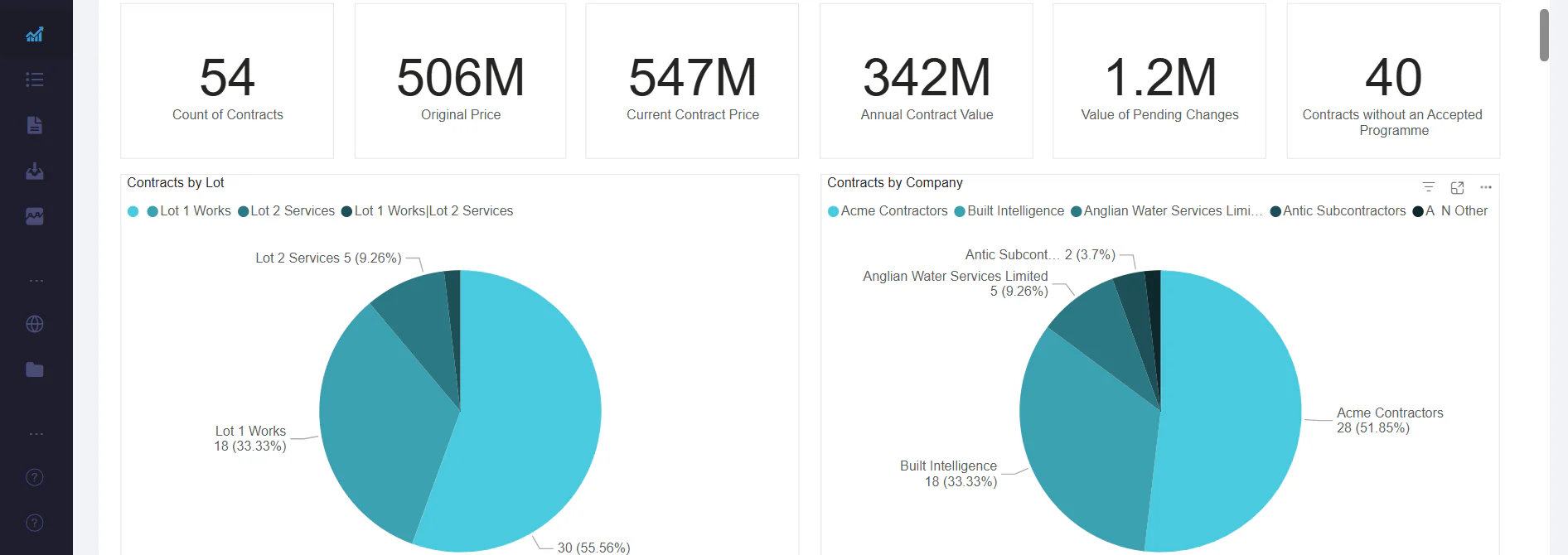
Don’t Just Sit On Your Data; Use It! With Reports
Your contract management system holds a wealth of valuable information but too often, that data sits unused. The best platforms make it easy to turn raw contract data into actionable insight, using real-time dashboards and reporting tools to highlight risks, track changes, and monitor how well your team is managing contractual obligations.
Reporting tools should give you visibility over response times, outstanding actions, bottlenecks, and patterns of communication. With this insight, managers and commercial teams can step in early to resolve issues before they escalate into delays or disputes.
Some systems offer built-in reporting through tools like Power BI, which lets you visualise and interrogate contract performance across your projects. FastDraft, for example, uses Power BI reporting to allow users to drill down on single projects, or expand their analysis across their entire portfolio. For organisations managing multiple projects, FastDraft also offers professional services such as health check reporting, benchmarking, and the creation of tailored reports across the 60+ KPIs the reporting system tracks, allowing you to resolve any operational inefficiencies based on targeted data.
Looking ahead, AI-powered features are beginning to unlock even deeper analysis of contract communications. From identifying risk patterns to benchmarking performance, these capabilities are evolving fast, and construction teams that embrace them will be better equipped to deliver on time, on budget, and in full control.
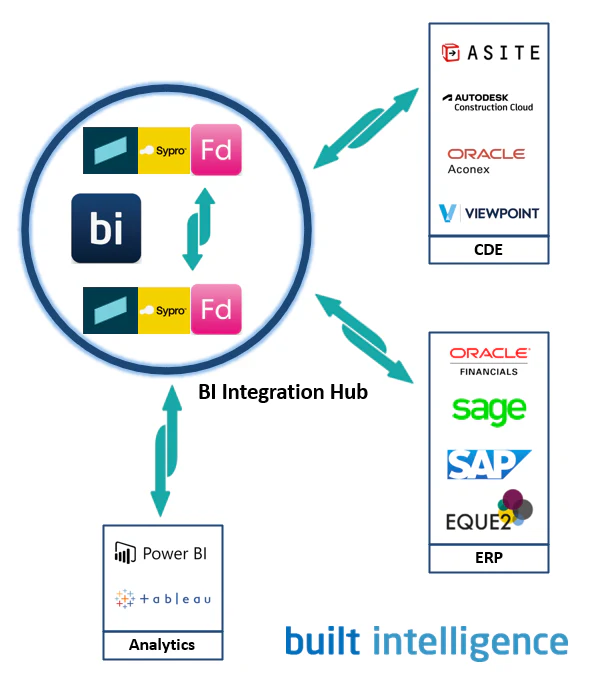
Integrate Contract Data with Project and Financial Systems
A contract management system doesn’t have to operate in isolation. Its true value is realised when integrated with your existing tech stack.
Integrations can start with simple tasks to reduce admin, like duplicating notices across subcontracts to reduce manual input, and evolve to become much more complex. Other integration examples are as follows:
- Other Contract Management Systems: Not only copying communications within FastDraft across packages but Upstream or Downstream whether FastDraft or to another CMS solutions.
- Common Data Environments (CDE’s): Attach documents directly from your CDE to a notice within FastDraft. Alternatively, publish your notice with attachments straight into your CDE.
- Enterprise Resource Planning (ERP’s): Track actual and committed costs by publishing Payment Certificates and agreed CE’s into your ERP.
- Analytics: Use the FastDraft Reporting API to pull data from FastDraft into your Analytics suite for a unified view of all your business data.
Invest in Training and Establish Clear Processes
Even the most sophisticated contract management software is only as effective as the people using it. Proper training ensures your team understands how to utilise all features effectively, reducing errors and increasing efficiency.
Provide regular training sessions, tailored to different roles – from contract administrators to site managers. This helps ensure everyone knows how to upload documents, set alerts, manage amendments, and generate reports.
Besides training on the systems themselves, pairing with upskilling of contract knowledge in general offers a huge upside. A team of new graduates, for example, may be trained to use a system efficiently, but it won’t matter if they can’t combine it with applied knowledge of your chosen contract types. Get them up to speed with simple, digestible construction contract training.
Beyond training, establish clear internal processes for contract administration. Define who is responsible for each task, such as reviewing variations, approving changes, or issuing notices. Document these procedures and embed them into your contract management workflows within the system.
A well-trained team operating within structured processes will make better use of your contract management software, minimise risks, and promote consistency across projects.
Final Thoughts
In modern construction projects, contract management software is an invaluable tool for streamlining administration, enhancing transparency, and reducing disputes. But to unlock its full potential, project teams must adopt a strategic approach – standardising data, automating alerts, controlling amendments, integrating systems, and investing in people.
By following these steps, you’ll not only improve your project’s efficiency but also build stronger relationships with clients, contractors, and stakeholders. Remember, the goal isn’t just to manage contracts – it’s to use them as a foundation for successful project delivery.
If you’re looking to optimise your construction contract management processes and harness the full power of your software, we’re here to help. Explore our resources or get in touch to discover how tailored solutions can make your construction projects more predictable, profitable, and dispute-free.
Training budgets: an investment in capability, consistency and cost control
A training budget should not be seen only as a cost to control. Used well, it is an investment in reducing risk, improving consistency and building the capability people need to perform effectively. For organisations managing complex projects and contracts, targeted learning can reduce avoidable mistakes, strengthen business knowledge and address capability gaps before they become costly. A strong training budget directs investment towards the capability gaps that create the greatest operational and commercial risk. Why training investment matters Without the right training, employees can lose time searching for answers, repeating work, or escalating issues that could have been handled earlier. In contract management, knowledge gaps can also increase the risk of missed obligations,...

Continuous learning: an investment that can reduce business costs
In construction and contract management, knowledge gaps can quickly become expensive. Missed notices, poor record-keeping, misunderstood contract obligations and inconsistent processes can lead to delays, rework, disputes and avoidable risk. Continuous learning helps teams keep their knowledge current, apply it confidently and make better decisions before small issues become costly problems. A strong continuous-learning programme is more than occasional training. It gives people access to relevant, practical learning, supports them with expert guidance, and helps organisations track development so capability improves over time. Four ways continuous learning can save money 1. Reduce avoidable errors and rework When employees understand contract requirements, commercial processes...

NEC Contract Guide: NEC Contracts Explained
NEC is a standard form of contract widely used on UK construction and infrastructure projects, now in its fourth edition, NEC4. For anyone working under one for the first time, the language and structure take some getting used to. This guide sets out what that means in practice: how NEC4 differs from NEC3, what the main contract types and options are for, and what to get right in the first few weeks so the contract works the way it's designed to. What is an NEC Contract? The New Engineering Contract, or NEC, is not one single contract but a family of standard contracts used across UK construction and infrastructure projects. That's why the question comes up in two forms: what is an NEC contract, and what are NEC contracts. Both are asking about the same suite of related...