
FastDraft: From NEC Training to Embedded Discipline
The early days of an NEC contract set the tone for everything that follows. Yet, on many projects, the first 90 days are where discipline slips, processes drift, and risk quietly builds.
Teams attend training. They understand the contract. They start with good intentions. But as delivery pressures increase, the gap between what people know and what they actually do begins to widen.
That gap is where projects lose control.
FastDraft closes it.
By embedding structure, prompts and accountability directly into the workflow, it turns NEC knowledge into consistent, repeatable behaviour from day one.
Behaviour vs documentation
NEC contracts are designed around proactive management, clear communication and strict timescales. Success depends less on what is written and more on how people behave.
Most organisations focus heavily on manual documentation:
- Contract clauses are understood
- Processes are explained
- Templates are shared
But documentation does not drive behaviour.
In practice, delivery teams rely on:
- Personal experience
- Memory of deadlines
- Informal trackers and spreadsheets
This creates inconsistency. Two projects using the same form of contract can perform very differently depending on who’s managing them.
The first 90 days are critical because they establish habits that become very hard to unpick further down the line:
- Are early warnings raised consistently?
- Are programme submissions on time?
- Are communications structured and auditable?
The longer processes aren’t properly followed, the longer the effect and ‘clean-up’ process.
FastDraft shifts the focus from static documentation to active delivery. It creates a structured environment where the contract is not just understood, but performed correctly from day one.
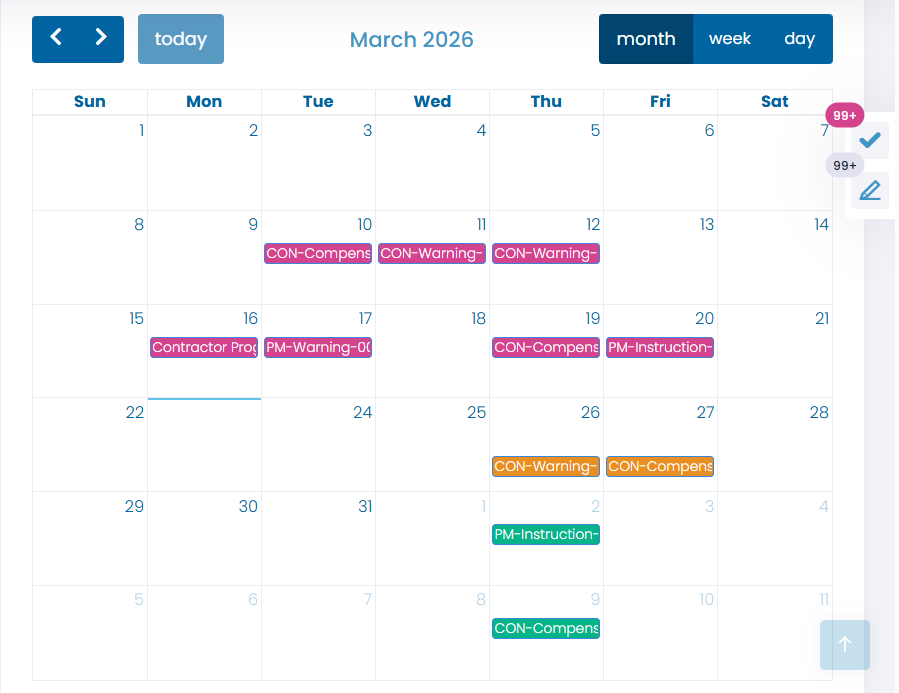
That means automated reminders eg. to submit payment certifications in contract set-up, clear assigned deadlines, and compliance as standard.
Why diary reminders fail
Most teams attempt to manage NEC obligations using calendars, email reminders or personal to-do lists.
On paper, this seems to work. In reality, it rarely does.
Diary reminders fail because they’re detached from the contract context, dependent on individuals maintaining them, and easy to ignore when delivery pressure increases.
They also lack clarity. A reminder might say “Submit programme”, but it doesn’t explain:
- What version is required
- What supporting information is needed
- What happens if the deadline is missed
Over time, reminders just become noise, not control. And what happens when someone leaves or takes sick leave?
This is where risk accumulates:
- Missed notifications
- Late submissions
- Weak audit trails
- Increased exposure to dispute
In NEC contracts, timing and process aren’t optional. Missing them can have direct commercial consequences.
FastDraft removes reliance on memory and disconnected tools. Instead of generic reminders, it provides structured, contract-specific prompts within the workflow itself.
How embedded prompts improve compliance
Embedding prompts directly into the contract workflow changes behaviour in a fundamental way.
Rather than expecting individuals to remember what to do, the system guides them in real time.
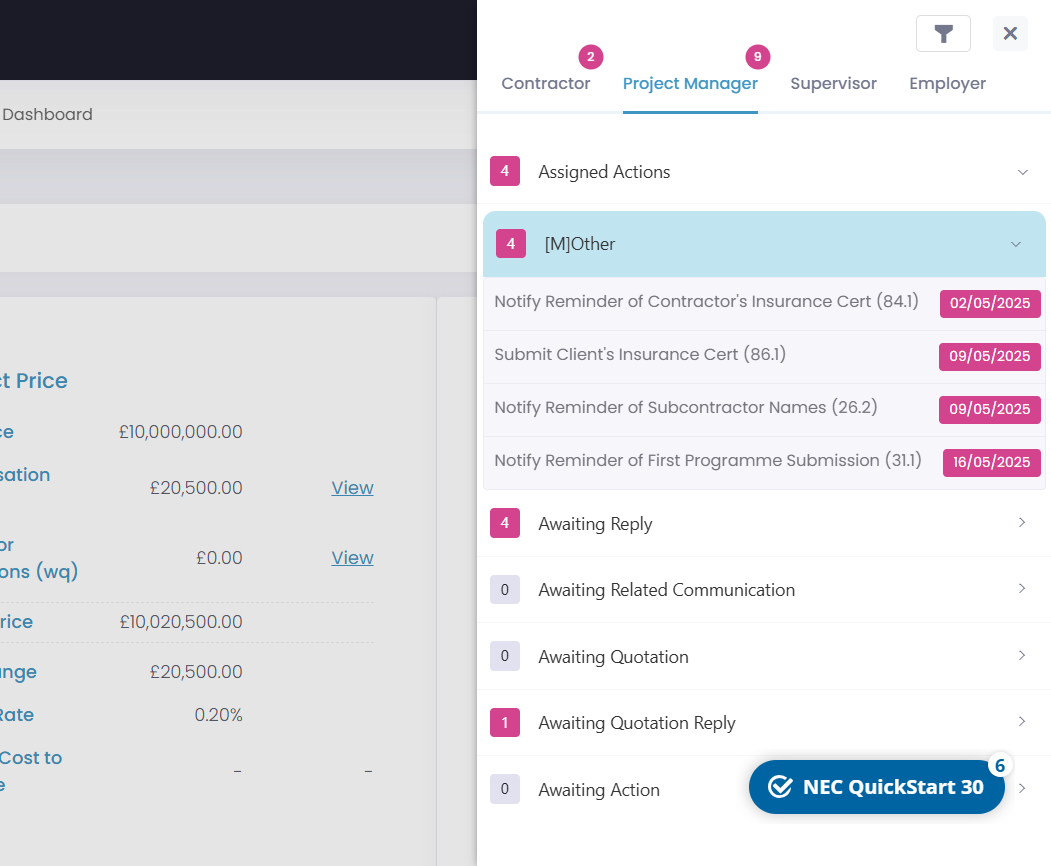
FastDraft’s In-App Coaching feature does exactly this.
It pre-loads each contract with:
- Key milestones
- Time-based obligations
- Role-specific actions
From the outset, teams have clarity on:
- What needs to be done
- When it needs to be done
- Why it matters under the contract
Importantly, it supports the behavioural intent of NEC. It reinforces proactive management rather than reactive administration.
Instead of relying on training alone, discipline becomes part of the system.
A practical use case for in-app coaching
Consider the early warning process in the first 90 days of a project.
In many organisations, this depends on individual judgement. Someone recognises a risk, remembers the requirement, and raises an early warning (if they have time and confidence).
These are then sent by email, and liable to be lost in chaotic inboxes and left to busy QS’ to chase a response.
With FastDraft, the process is different.
- The contract is pre-configured with early warning requirements
- The system prompts users when risk indicators arise
- Guidance explains what constitutes an early warning
- The workflow ensures the notice is issued correctly and on time
There’s no more ambiguity or unchecked individual responsibility. Everyone knows where they stand, and responsibility is tracked and visible in the system.
The result is:
- Earlier visibility of risks
- Better collaboration between parties
- Stronger alignment with NEC principles
The same applies to other critical activities in the first 90 days:
- Programme submissions
- Payment applications
- Compensation event notifications
Each is supported by embedded prompts and structured workflows.
From knowledge to discipline
The construction industry may suffer from a lack of knowledge about NEC contract, but the overriding challenge lies in consistent execution.
The first 90 days expose this gap more than any other phase.
When teams rely on memory, manual trackers and good intentions, variability is inevitable. That variability creates risk.
Systems like FastDraft replace this uncertainty with structure.
It transforms:
- Training into action
- Processes into behaviour
- Contracts into living workflows
By embedding discipline directly into the system, it ensures that the right actions happen at the right time, every time.
For organisations serious about reducing commercial risk and improving project outcomes, the message is clear:
Don’t leave the most critical phase of your contract to chance.
Build discipline in from day one.
Start embedding best practices from day one

5 things you need to do in the first 90 days of your NEC Contract
When it comes to NEC contracts, the first few weeks of a project set the tone for the entire delivery. Many disputes, delays, and unnecessary costs originate not from technical complexity but from overlooked processes, unclear roles, and poor documentation right at the start. NEC4 is designed for proactive management. If you treat it like a traditional contract and “sort it out later”, you risk compounding small issues into major problems.Small Mistakes, Big Consequences Early inconsistencies in NEC4 contracts can escalate quickly. Common examples include: Incomplete Contract Data – Missing dates, unclear roles, or unvalidated options can cause confusion when a time-critical decision arises. Uncoordinated Scope / Works Information – Ambiguities in what needs delivering often surface as...
Introducing the JCT SBC 2024 Online Academy
The JCT Standard Building Contract (SBC) remains one of the most widely used forms of contract in UK construction. Yet many of the disputes, delays and payment issues that arise on projects can be traced back to a simple problem: misunderstanding how the contract actually works in practice. To address this, we have launched the JCT SBC 2024 Online Academy. A comprehensive programme designed to help construction professionals understand, administer and manage the contract with confidence. A Practical, Clause-by-Clause Learning Programme The JCT SBC 2024 Academy is a structured programme of 29 short online courses, delivering over 14 hours of learning that takes you through the contract from start to finish. Each course focuses on a specific area of the contract, providing clear...

Upcoming Webinars – March 2026
This March brings a series of webinars designed to support construction professionals across contracts, compliance, commercial management, and leadership. From deep dives into JCT Design & Build, NEC3 and NEC4, and FIDIC, to practical sessions on programmes, compensation events, defined cost, and capital allowances. The programme also looks beyond contract mechanics, with sessions addressing the Building Safety Act, sustainability and net zero, and the human side of the industry, helping managers navigate stress, decision-making, and leadership challenges. The full lineup is as follows: MAR 4 Contractor Obligations under JCT D&B Contract - Design and Quality Standards MAR 5 Understanding the Contractor and Subcontractor's Obligations under NEC3 ECS MAR 9 NEC4 PSC Part 1: How to...